
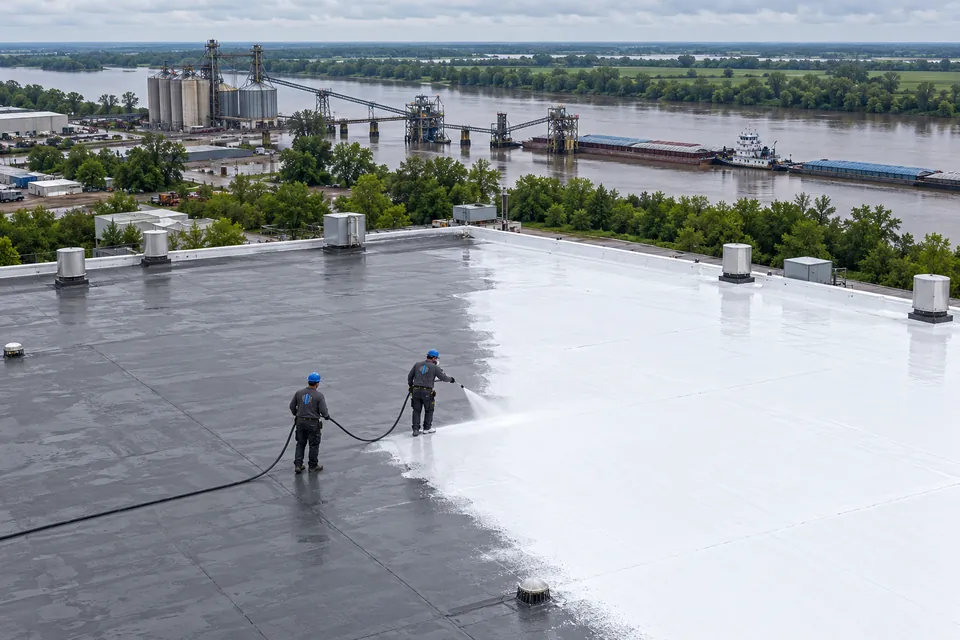
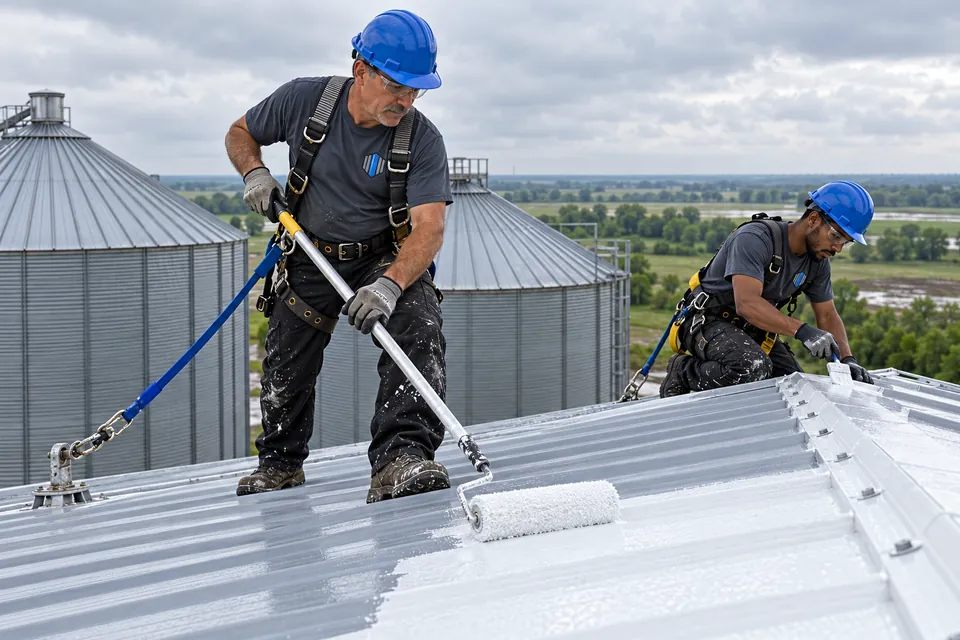
Paducah Silicone Roof Coating
Our Paducah silicone roof coating work targets metal roofs where water sits: low-slope panels, hail dents, and gutter lines that stay wet long after rain.
Quick Facts
- Takes standing water
- Fabric set at end laps
- Recoats stay silicone
- Business stays open
Is This Roof A Fit?
Silicone earns its place where water lingers. Match how your roof drains to the columns.
- Usually Fits
- Sometimes
- Rarely
| What You See On The Roof | Full Silicone | Silicone Spots Only | Another System |
|---|---|---|---|
| Low-slope metal where rain sits for a day or more | Usually Fits | Rarely | Rarely |
| Hail-dented panels that hold water in the dents | Usually Fits | Sometimes | Rarely |
| Seams near gutters that stay wet after rain | Sometimes | Usually Fits | Rarely |
| Pitched R-panel that drains within minutes | Rarely | Sometimes | Usually Fits |
| Buildings where every future recoat will be silicone | Usually Fits | Rarely | Rarely |
| An owner who wants the whitest roof between washings | Rarely | Rarely | Usually Fits |
Another System usually means acrylic on pitched panels; the roof walk confirms it.
Signs Water Is Sitting On Your Roof
Silicone fits roofs that hold water. These marks show where it sits and for how long.
- Watch keep an eye on it
- Repair First fix before coating
- Call Now active water
- Watch
Dirt Rings On Panels
Brown rings left after the water dries trace the outline of each pond. Ring width tells roughly how much the area holds.
- Repair First
Water-Filled Hail Dents
Dents on low-slope panels fill with every rain and stay wet long after the rest of the roof dries, wearing the paint at each dent.
- Repair First
Wet Seams At The Gutter
Laps at the eave stay damp when gutters run slow, and red rust starts at the panel ends there first.
- Watch
Puddles Around Curbs
Water dammed behind HVAC curbs and skylight frames sits against flashing that was built to shed water quickly.
- Repair First
Bubbles In Old Coating
Bubbles or peeling in an older coating over low spots mean water got under it. That film comes off before new silicone goes on.
- Call Now
Drips Under Low Spots
Ceiling drips that line up with a low area on the roof mean a lap or screw in that pond is open. Call before the insulation soaks.
Commercial Roof Coating Options for Paducah
How silicone goes on depends on how much of the roof holds water.
Full Silicone Field Coat
Low-slope metal roofs get a rust-inhibiting primer, fabric-reinforced silicone at end laps, ridge caps, and skylight panel edges, and a silicone field coat across every panel.
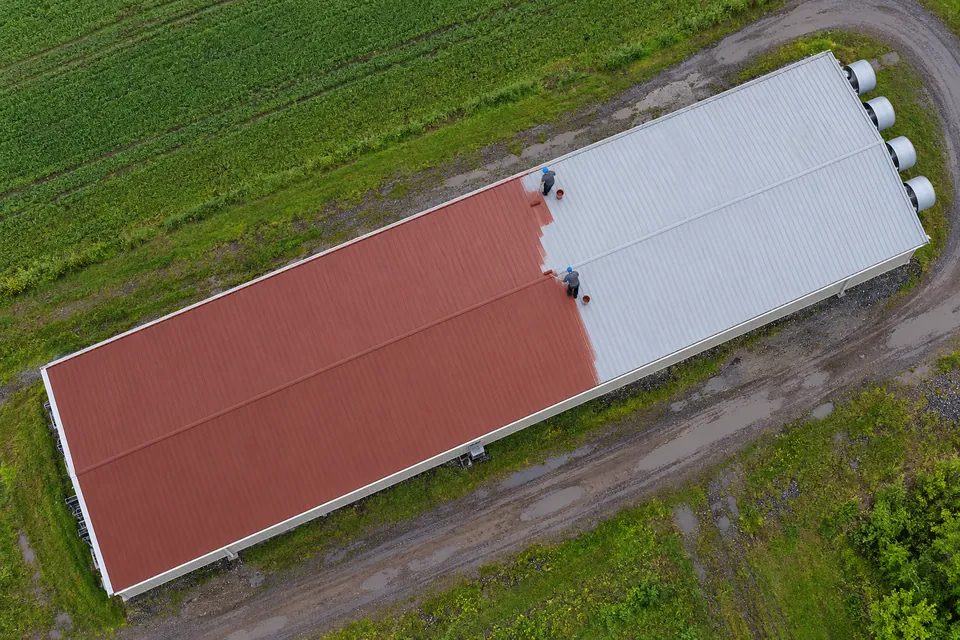
Silicone Spot Treatment
Sloped roofs with a few low areas around curbs or at gutters can take silicone only where water sits, with a compatible system on the drained slopes.
Acrylic Roof Coating in PaducahSeam Work Before The Field Coat
Fabric set in silicone goes across end laps and side laps first, since these joints move with every temperature swing and need more film than the flat of the panel.
Metal Roof Coating in Paducah
Benefits of Coating Your Roof
Four reasons silicone goes on roofs that hold water.
Handles Ponding
Silicone keeps its hold where rain sits for days, at dents, gutters, and behind curbs.
Keeps Its Stretch
Long sun exposure leaves the coating flexible, so it moves with roof panels that heat every afternoon.
Wider Work Season
Cooler, damper days that stop acrylic still leave room to coat the roof with silicone, widening the season at both ends.
Sealed Low-Area Laps
Every lap and fastener in the low areas ends up under one film instead of open to standing water.
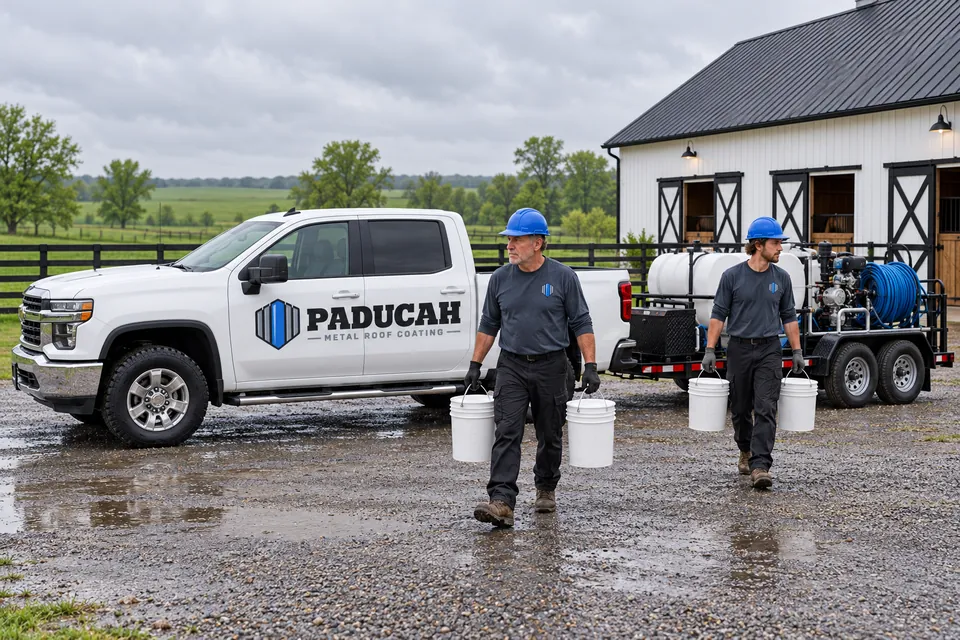
Water Still Standing Two Days After Rain?
Call and tell us where the water sits and how long it stays. Ponding on metal points toward silicone, and we check what is under it first.
How A Silicone Coat Goes On
Silicone work follows the same prep as any metal coating, with extra attention on the wet areas.
- 01
Inspect Your Roof
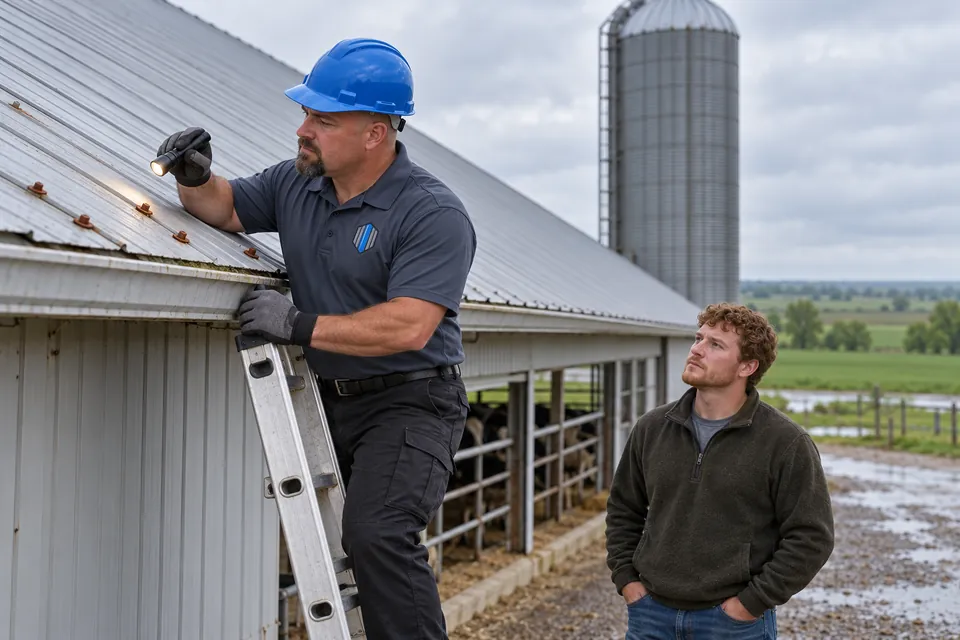
Ponding areas are marked during the roof walk, and the panels under each one are probed for rust and soft spots. The inspector also checks whether insulation below the wet areas has soaked up water.
On The Roof - 02
Dry Out And Clean
Standing water is cleared and the roof is power washed, then left to dry fully, since silicone bonds poorly to damp steel. Dirt rings at old ponds get extra scrubbing.
On The Roof - 03
Prime And Reinforce
Rusted areas get a rust-inhibiting primer, and end laps, ridge caps, and skylight panel edges get fabric set in silicone. Drains and gutters are cleared so water leaves during the cure.
On The Roof - 04
Cover Air Intakes
Rooftop units that pull in outside air are shut off or covered while silicone is sprayed, and parked cars near the eave are shielded from overspray. On windy days, crews roll instead.
At The Building - 05
Apply The Field Coat
Silicone goes on at the thickness on the coating maker’s data sheet, heavier where water sits. Future recoats stay silicone, so that note goes into the roof records.
On The Roof
Systems That Pair With Silicone
Other services that come up on roofs that hold water.
Acrylic Roof Coating
Sloped sections of the same building that drain quickly can take acrylic, which stays whiter between washings.
Acrylic Roof Coating in PaducahMetal Roof Coating
Every silicone job on steel starts with screw, washer, and lap repairs, the same prep any metal coating needs.
Metal Roof Coating in PaducahSpray Foam Roofing
Metal buildings that also need insulation can get foam over the panels, then a protective top coat.
Spray Foam Roofing in Paducah
Silicone Roof Coating Questions From Paducah
What owners ask when water sits on a metal roof.
How are panel seams and end laps sealed on a coated metal roof?
Seam sealer or a strip of fabric-reinforced coating goes over every side lap and end lap before the main coat. Those overlaps open in afternoon heat and close at night, and an unreinforced film can split along them. End laps take the most water, so old caulk and dirt are cleaned out and red rust is treated first.
When does silicone roof coating make sense over metal?
It makes the most sense on low-slope metal, dented panels that trap water, and seams near gutters that stay wet after rain, since silicone tolerates standing water. The trade-offs: dust and pollen stick to it, later recoats need silicone or a primer made for it, and future sealants and patches must be silicone-compatible.
Can a business stay open while the roof is being coated?
Most do, since the work happens on top of the roof and nothing is cut open. Air intakes on rooftop units are shut off or covered during spraying so odor stays out, overspray is controlled near parked cars and neighbors, and ladder or lift access is set away from customer doors.
Why does a white silicone roof turn gray?
Dust and pollen stick to silicone more than to acrylic, so a bright white surface dulls over time. Washing brings back much of the color. The gray film is surface dirt on top of the coating, though heavy buildup trims some of the sunlight the roof reflects.
Can silicone go over a roof that already has an old coating?
It depends on what the old coating is and how well it is bonded. Loose or peeling film comes off, and a test patch shows whether new silicone sticks to what remains. An old silicone roof takes silicone again; other old coatings call for a primer the coating maker lists.
Get A Free Estimate For Silicone Roof Coating
Tell us where water sits on your roof and how long it stays, and we will check the panels under each pond before pricing silicone.
Or call (270) 236-5587