
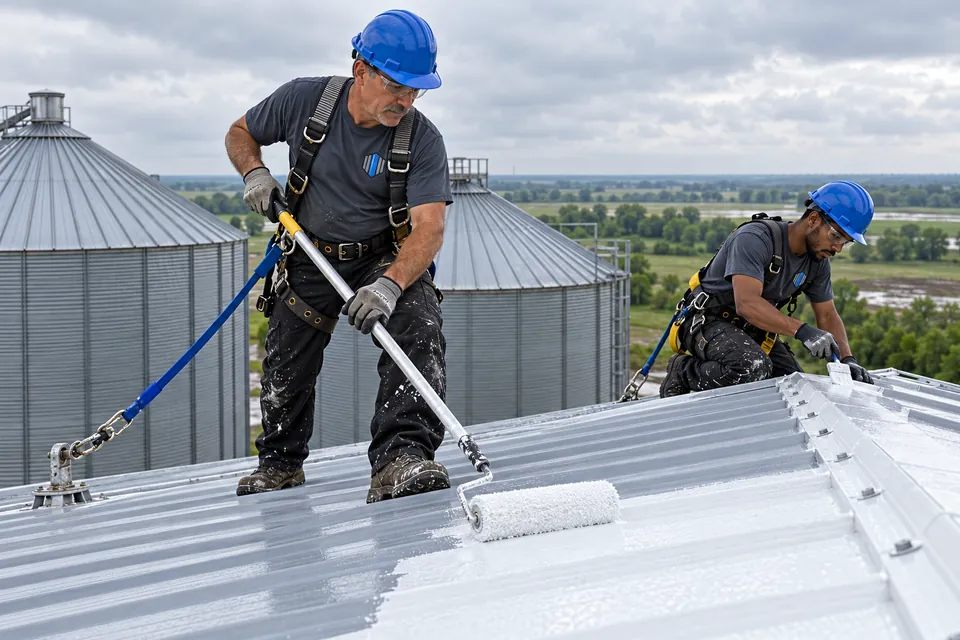
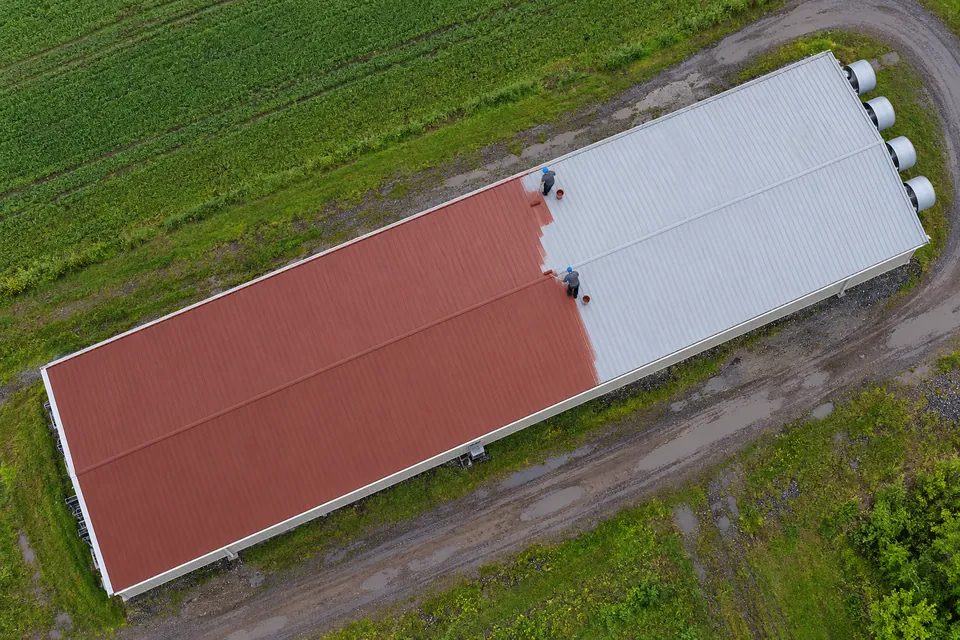
Paducah Commercial Metal Roof Coating
Commercial metal roof coating for Paducah warehouses, shops, and plants: every screw, lap, and ridge cap is sealed before the field coat goes on.
Quick Facts
- Screws upsized or resealed first
- End laps reinforced with fabric
- Rust graded before priming
- R-panel and standing seam
Is This Roof A Fit?
Rows are what you can see on a metal roof; columns are the jobs that follow. Most firm R-panel roofs land in the first column.
- Usually Fits
- Sometimes
- Rarely
| What You See On The Roof | Coat Now | Restore First | Re-Panel |
|---|---|---|---|
| Orange bloom on the paint, steel firm when probed | Usually Fits | Rarely | Rarely |
| Flaking scale rust with firm steel underneath | Usually Fits | Sometimes | Rarely |
| Red rust bleeding from end laps and screw holes | Usually Fits | Sometimes | Rarely |
| Pinholes showing daylight in a few sheets | Rarely | Usually Fits | Sometimes |
| Perforation across whole runs of panels | Rarely | Sometimes | Usually Fits |
| Panels loose at the purlins or crushed underfoot | Rarely | Sometimes | Usually Fits |
Restore First means the bad sheets are replaced, then the roof is coated.
What Leaks First On A Metal Roof
On exposed-fastener roofs, a short list of parts accounts for most leaks. Each one is graded by how soon it needs work.
- Watch keep an eye on it
- Repair First fix before coating
- Call Now active water
- Repair First
Cracked Rubber Washers
Sun dries out the washer under each R-panel screw until it splits, and water follows the screw shank inside. Coating over a failed washer leaves the leak in place.
- Repair First
Stripped Or Overdriven Screws
Overtightened screws dimple the panel so water pools around the washer, while stripped ones spin loose. Stripped screws are swapped for the next size up.
- Repair First
Open End Laps
End laps take the most water because each panel overlaps the next one down the slope. Dirt and old caulk come out before fabric goes in.
- Watch
Loose Ridge Cap Screws
Wind flexes the ridge cap until its screws back out, opening the top of every panel run. A walk along the ridge shows which ones lifted.
- Watch
Cracked Skylight Panels
Translucent panels yellow and crack along the edges where they lap the steel. A cracked panel gets replaced, since coating cannot bridge a hole.
- Call Now
Stains Spreading After Storms
Ceiling tiles that darken after each storm mean water is getting through now. Call so the path is traced before the insulation soaks.
Commercial Roof Coating Options for Paducah
The panel profile and how fast the roof drains decide which system goes over the steel.
Acrylic Over Pitched Panels
Pitched R-panel roofs that shed rain quickly take an acrylic field coat over a rust-inhibiting primer, with fabric at the end laps. The white surface stays cleaner than silicone.
Acrylic Roof Coating in Paducah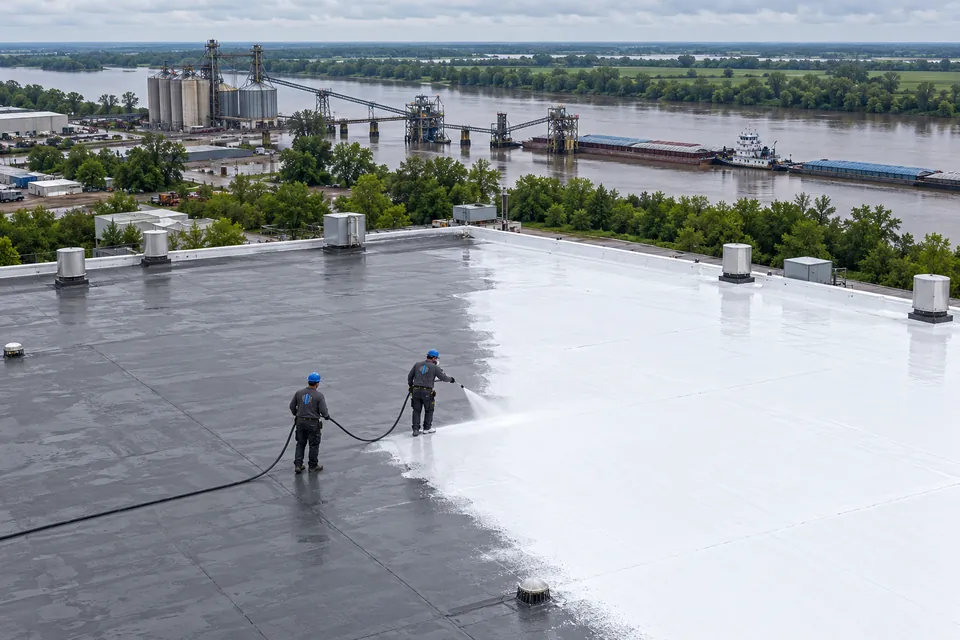
Silicone Over Low-Slope Metal
Low-slope panels, dented sheets, and gutter lines that stay wet get silicone, which tolerates standing water. Later recoats on that roof stay silicone.
Silicone Roof Coating in Paducah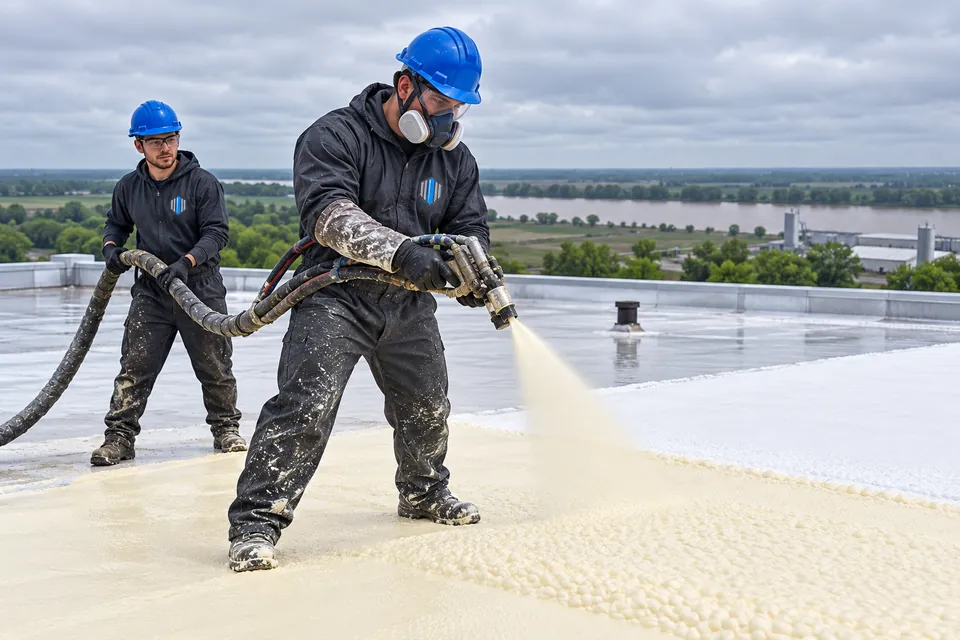
Foam And A Top Coat
Buildings that also need insulation get spray foam over the panels after a purlin load check. The foam buries every screw head and gets its own protective coat.
Spray Foam Roofing in PaducahRestore, Then Coat
Roofs with a few rusted-through sheets get those sheets replaced on the existing purlins, then the whole roof is coated as one surface.
Benefits of Coating Your Roof
Four gains from coating firm metal panels in place.
Laps That Stay Shut
Fabric-reinforced coating bridges side and end laps that open and close with every heat cycle.
Fewer Leak Points
Hundreds of exposed screw heads end up sealed under one continuous film.
Rust Held Back
Primer and coating cover cleaned rust so moisture stops reaching bare steel.
Panels Stay On
Firm sheets stay on the purlins, which keeps old steel out of the landfill and the building closed in.
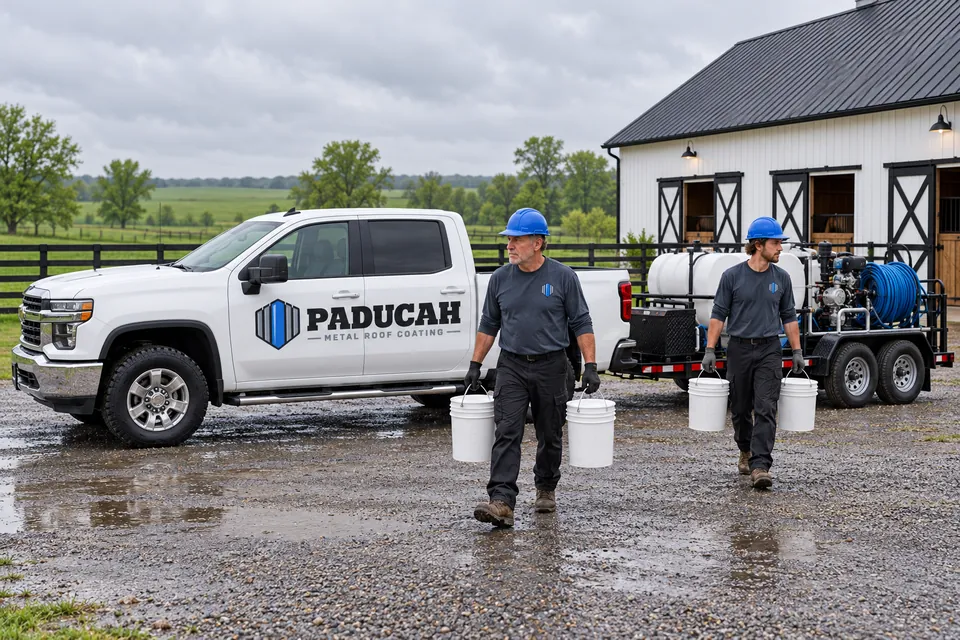
Screws Leaking Across The Whole Roof?
Call with the panel type and roughly how many leaks show inside. A roof with hundreds of failed washers is a coating job, and we can walk it with you.
How We Coat A Metal Roof In Paducah
Prep takes most of the labor on a metal roof, so four of these five steps happen before the field coat.
- 01
Inspect Your Roof
A scraper and a tap test grade the rust on each run of panels, and a fastener count shows how many washers have failed. Gutters, ridge caps, curbs, and skylight panels get photographed too.
At The Building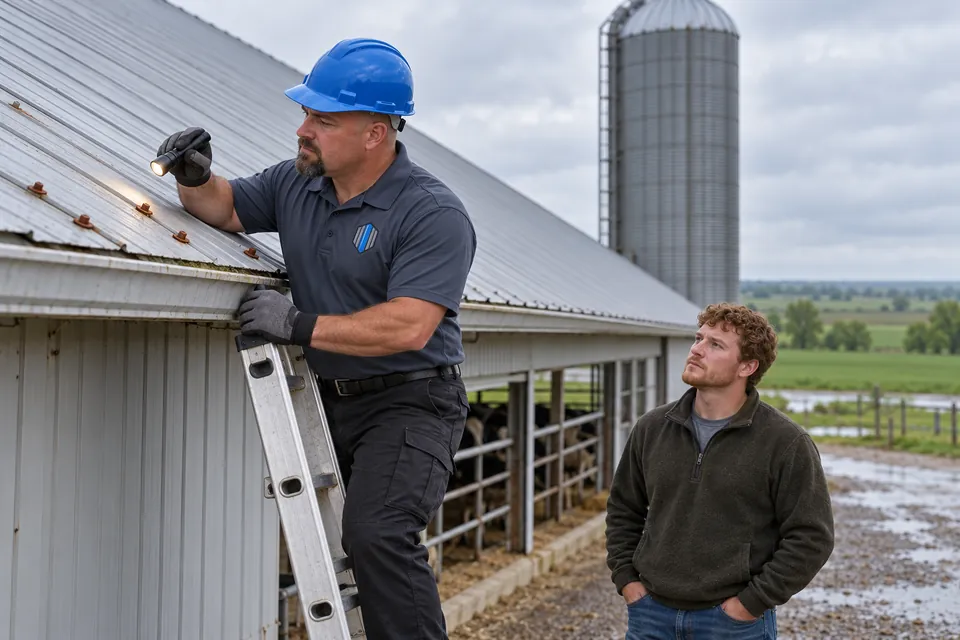
- 02
Wash And Test For Chalk
Power washing removes dirt, oil, and loose rust. A wipe test on the old paint then shows whether chalking is left, since a chalky film weakens the bond.
On The Roof - 03
Treat Rust And Replace Screws
Light rust bloom is wire-brushed and primed, scale rust is scraped or ground first, and every stripped screw is swapped for an oversized fastener with a new washer.
On The Roof - 04
Reinforce Laps And Trims
End laps, side laps, ridge caps, and rake and eave trims get seam sealer or polyester fabric set in a base coat. Pipe boots and HVAC curb flashings are detailed by hand.
On The Roof - 05
Apply Base And Top Coats
Field coats go on at the thickness listed on the coating maker’s data sheet, with dry hours before rain or dew. Leaks inside often stop once the screws and laps are sealed.
On The Roof
Other Systems For Metal Buildings
Services that often pair with a metal roof job.
Silicone Roof Coating
Low spots and gutter lines on a metal roof that hold water after rain call for silicone spot treatment or a full silicone coat.
Silicone Roof Coating in PaducahSpray Foam Roofing
When the building runs hot or sweats inside, foam over the panels adds insulation that a coating alone leaves out.
Spray Foam Roofing in PaducahShingle Roof Coating
Mixed buildings with a shingled office front can have that section checked for a shingle coating at the same visit.
Shingle Roof Coating in Paducah
Commercial Metal Roof Coating Questions In Paducah
What owners ask about coating exposed-fastener and standing seam roofs.
Does a coating stop leaks on an old metal roof?
It stops them at the usual leak points: screws, side laps, end laps, ridge caps, and flashings at curbs and pipes. The prep does most of that work: oversized screws with new washers, seam sealer or fabric at end laps, and hand-detailed skylight and curb flashings. Leaks through a gutter hole or a wall panel need their own repair.
Can you coat over rust on a metal roof?
Surface rust, yes, once it is cleaned and treated; rust that has eaten through the steel needs new metal first. Tapping and probing with a scraper tells the two apart. Light bloom gets wire-brushed and primed, flaking scale is scraped or ground, red rust at laps gets fabric, and perforated sheets are patched or replaced.
Do the screws on an exposed-fastener roof need to be replaced before coating?
Every screw is checked, and the loose, stripped, or rusted ones are tightened, upsized, or fitted with new washers. Rubber washers dry out and crack in the sun, and a coating over a failed washer leaves a leak path right under it. Overtightened screws that dimple the panel get attention too, since water pools in the dent.
How is a metal roof prepared for coating?
Cleaning comes first, then rust treatment, screw work, and seam reinforcement, in that order. On a standing seam roof the work centers on clips, trims, penetrations, and any leaking seam; on an R-panel roof every screw is checked and both side and end laps are reinforced. A wipe test confirms the chalky film on old paint is gone.
Can a coating go over laps that were caulked years ago?
Yes, after the old caulk is cut out. Dried caulk at end laps and around screws holds dirt and lets water in behind it, so it is removed, the lap is cleaned and primed, and fresh seam sealer or fabric goes in before any coating.
Get A Free Estimate For Your Metal Roof Coating
Tell us the panel type, roof size, and where it leaks, and we will grade the rust and count the failed screws on site.
Or call (270) 236-5587