
Paducah Acrylic Roof Coating
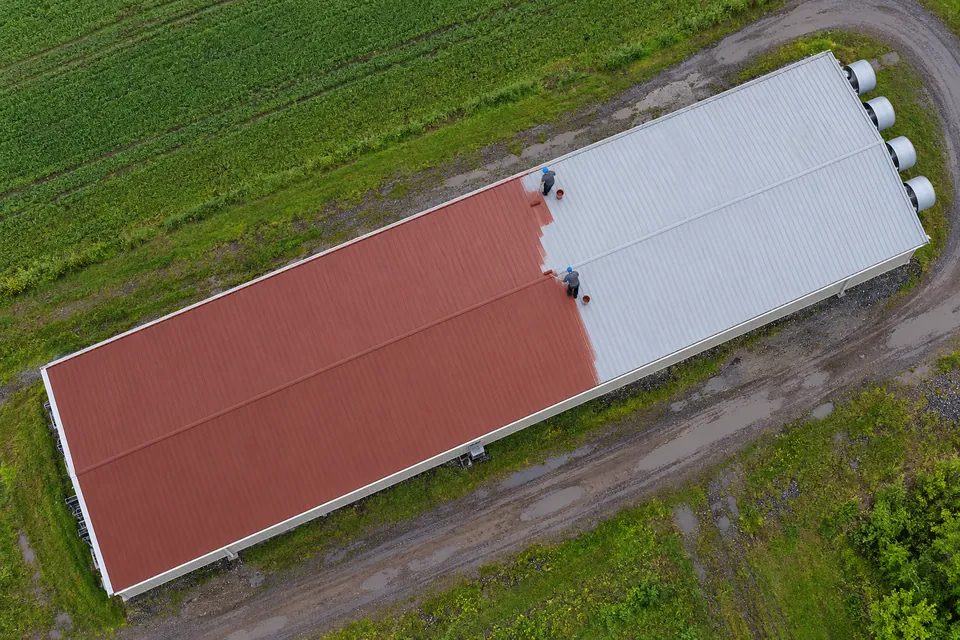
We apply acrylic roof coating to pitched metal roofs around Paducah that drain fast, timing each coat for warm, dry stretches so dew and showers stay off uncured film.
Quick Facts
- Bright white, stays cleaner
- Scheduled for dry weather
- Recoats from several families
- Best on pitched panels
Is This Roof A Fit?
Acrylic does best where rain runs off quickly. Compare your roof with the rows below.
- Usually Fits
- Sometimes
- Rarely
| What You See On The Roof | Acrylic | Acrylic Plus Silicone Spots | Silicone Instead |
|---|---|---|---|
| Pitched R-panel that drains within minutes of rain | Usually Fits | Rarely | Rarely |
| Pitched roof with a few low spots at gutters or curbs | Sometimes | Usually Fits | Rarely |
| Low-slope metal where water stands a day or more | Rarely | Sometimes | Usually Fits |
| Hail-dented panels holding water across the field | Rarely | Sometimes | Usually Fits |
| Roof with an existing silicone coating | Rarely | Rarely | Usually Fits |
| An owner who wants the roof to stay whiter between washings | Usually Fits | Sometimes | Rarely |
Silicone over silicone is the rule, because acrylic will not bond to an old silicone coat.
Signs To Check Before An Acrylic Coat
These conditions decide whether acrylic goes on as planned or the roof needs other work first.
- Watch keep an eye on it
- Repair First fix before coating
- Call Now active water
- Repair First
Low Spots That Hold Water
Standing water softens acrylic, so any dent or flat area that ponds needs silicone spot treatment or a different system.
- Watch
Chalky Old Paint
Rubbing a hand across the panel and getting white powder means chalking, which has to be washed off for the acrylic to bond.
- Repair First
Rust At Fastener Holes
Red streaks running down from screws mean rust is working at the holes; those get primed before the base coat.
- Watch
Cold Steel Mornings
Panels below the product’s minimum surface temperature slow the cure, so late fall and winter jobs wait for warmer stretches.
- Repair First
Open Side Laps
Gaps along the side laps on long pitched runs let wind push rain sideways under the panel, so seam sealer goes in first.
- Call Now
Active Leaks Inside
Fresh drips after rain mean the roof needs sealing now, ahead of the coating schedule. Call so the leak path gets traced.
Commercial Roof Coating Options for Paducah
Acrylic goes on in a few ways, set by how the roof drains and what is on it now.
Two Coats Over Primer
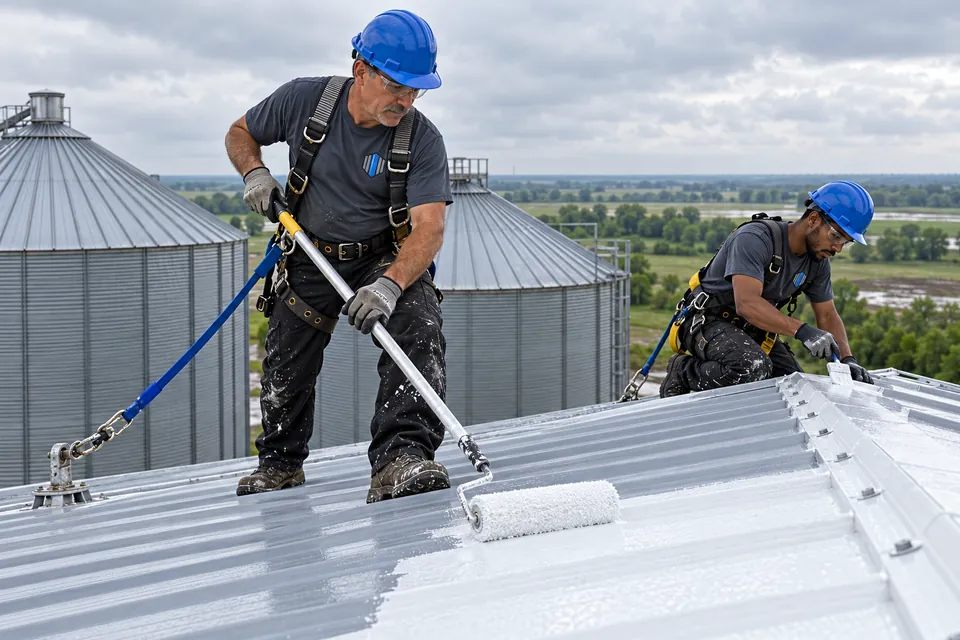
Pitched metal gets a rust-inhibiting primer, a base coat, and a top coat, with fabric at end laps and ridge caps. Each coat cures before the next one goes on.
Acrylic With Silicone Spots
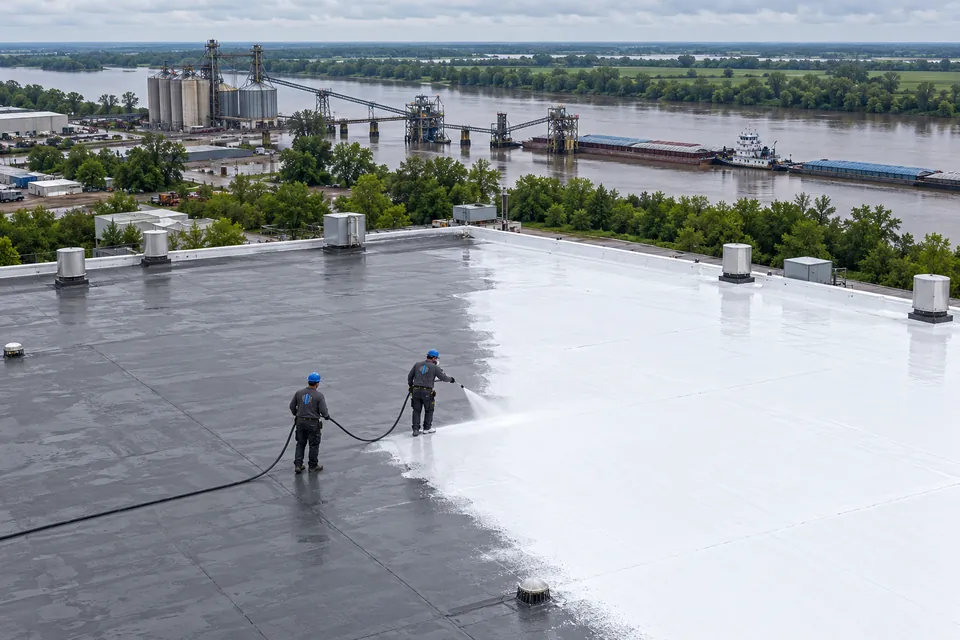
Where a pitched roof has a few low areas at gutters or around curbs, silicone goes on those spots first and acrylic covers the drained slopes.
Silicone Roof Coating in PaducahRecoat Of An Older Acrylic
An acrylic roof that is still bonded can be cleaned and recoated, since acrylic accepts recoats from several coating families.
Benefits of Coating Your Roof
Four reasons acrylic suits pitched metal roofs.
Brighter Surface
White acrylic stays cleaner than silicone, so the roof keeps reflecting sunlight between washings.
Easy Recoats
Later coats bond to a clean acrylic film, and several coating families can go over it.
Water-Based Cleanup
Tools and overspray clean up with water, which keeps work near parked cars and walkways simpler.
Fits Pitched Panels
Ribbed R-panel roofs that shed rain fast give acrylic the dry surface it needs to hold up.
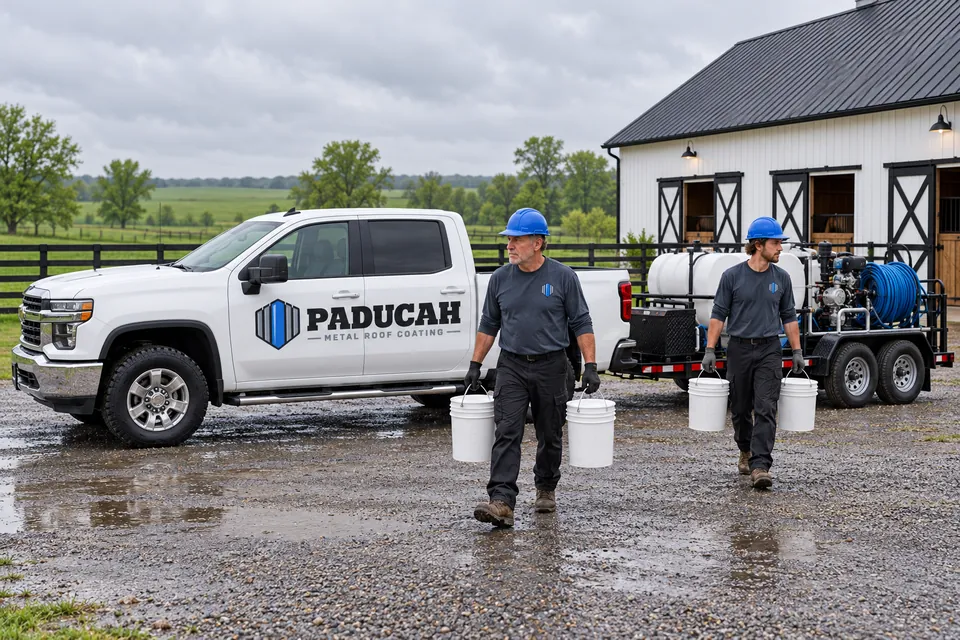
Planning A Summer Coating Job?
Warm, dry stretches book first, and pop-up showers can wash uncured acrylic off the panels. Get a ballpark number now so the work lands in a good weather window.
How Acrylic Goes On A Pitched Roof
Weather sets the pace on an acrylic job, so the schedule is built around dry hours.
- 01
Inspect Your Roof
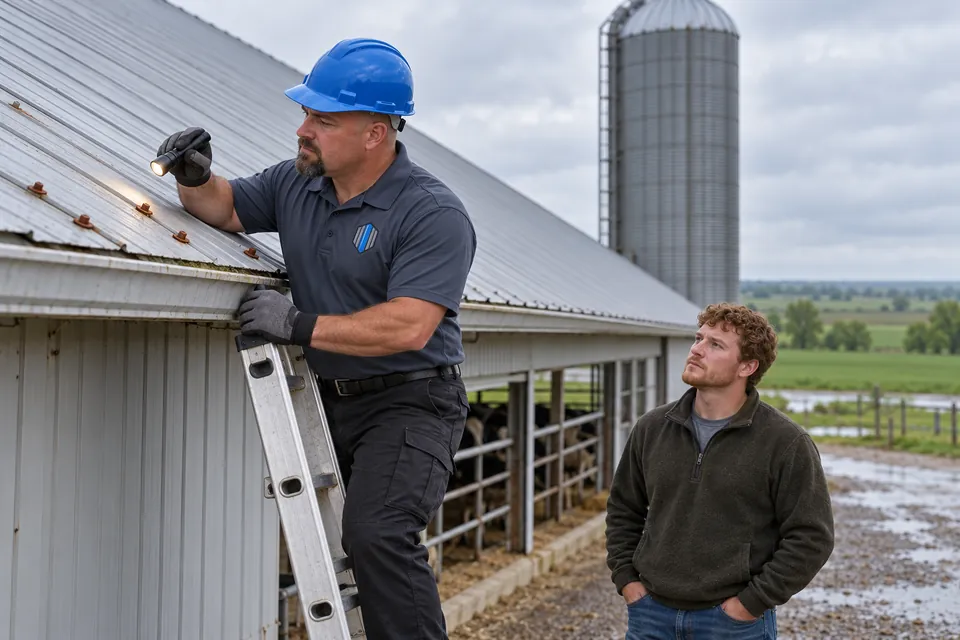
The roof walk looks for low spots that hold water, chalky paint, rust at screw holes, and open laps. A slope check confirms the panels drain fast enough for acrylic.
On The Roof - 02
Pick The Weather Window
Each coating lists a minimum roof surface temperature and how long it needs before rain or dew. Forecasts from the National Weather Service office in Paducah set the start date and the daily hours.
Paperwork - 03
Wash And Prime
Power washing removes chalk and dirt, and rust at laps and screw holes gets a rust-inhibiting primer. Stripped screws are replaced and laps are sealed before any field coat.
On The Roof - 04
Base Coat With Fabric
Fabric goes into the base coat at end laps, ridge caps, and trims, then the base coat covers the field. It cures fully before the top coat starts.
On The Roof - 05
Top Coat Before The Dew
Crews start after morning dew burns off and stop with enough dry hours left before evening, so the film skins over before moisture settles on the panels.
On The Roof
Other Systems For Pitched Metal
Services that come up alongside an acrylic job.
Silicone Roof Coating
Low areas on the same roof that pond after rain get silicone, since acrylic softens under standing water.
Silicone Roof Coating in PaducahMetal Roof Coating
Screw, washer, and lap repairs on R-panel roofs are part of every acrylic job over steel.
Metal Roof Coating in PaducahShingle Roof Coating
Shingled entry roofs or office fronts on the same building can be checked for a coating during the same roof walk.
Shingle Roof Coating in Paducah
Acrylic Roof Coating Questions From Paducah
What owners ask about acrylic on pitched metal roofs.
Is silicone or acrylic better for a metal roof in western Kentucky?
It comes down to drainage. Silicone handles water that ponds or sits, while acrylic performs well on sloped metal that sheds rain fast and stays cleaner over time. Silicone also tolerates cooler, damper application days; acrylic needs warm, dry curing time. Most pitched R-panel roofs drain well enough for acrylic, and later recoats over silicone have to be silicone.
When is acrylic roof coating the right call?
On sloped metal roofs that drain cleanly, especially when the owner wants a bright white surface that stays cleaner than silicone. Acrylic is water-based, cleans up easily, and accepts recoats from several coating families. It needs warm, dry weather to cure, and flat spots at gutters, hail dents, and low areas around curbs need silicone spot treatment first.
When is the best time of year to coat a metal roof near Paducah?
Late spring through early fall gives the longest warm, dry stretches. Spring brings mild panel temperatures but storm lines, summer cures fast but panels run hot and humid by afternoon, fall has steady weather with heavy morning dew, and winter suits planning and repairs. The coating maker’s data sheet sets the minimum temperature and dry time.
What happens if it rains before acrylic cures?
A shower or heavy dew before the film skins over can wash uncured acrylic off the panels, leaving thin or streaked areas. Those sections are cleaned and recoated once the roof dries. That risk is why acrylic work starts after the dew lifts and stops with dry hours left in the day.
Does acrylic need a primer on galvanized panels?
Bare galvanized or Galvalume steel calls for a specific cleaner and, on bare zinc, a primer made to bond to it, per the coating maker’s instructions. Skipping that step is a common reason coatings peel off galvanized panels. Painted panels in good shape follow the maker’s directions for painted steel instead.
Get A Free Estimate For Acrylic Roof Coating
Tell us the roof pitch, size, and any low spots, and we will plan the acrylic around a dry stretch of weather.
Or call (270) 236-5587